Can You Add a Battery to an Existing Solar System?
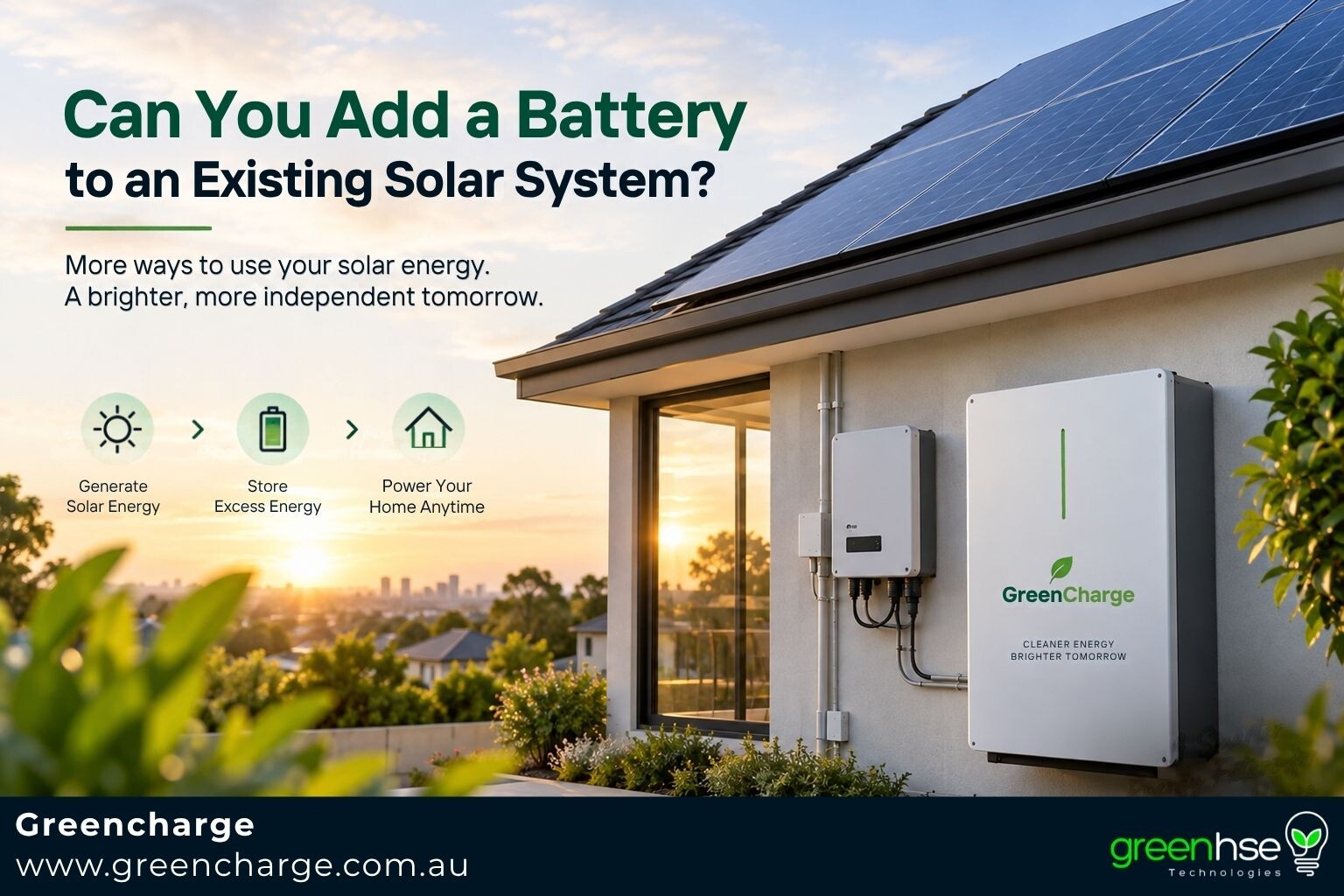
If you already have solar panels installed, you may be wondering whether you can add a battery without replacing your entire system. In many Australian homes, the answer is yes.
Adding a battery to an existing solar system lets you store excess solar energy generated during the day and use it later when your panels aren't producing electricity. This can be particularly useful for households that use more electricity in the evening or want to reduce their reliance on grid electricity.
However, not every existing solar system is automatically battery-ready. You need to consider your inverter, solar system design, available space, electrical setup, and battery compatibility before installation.
Here's what Australian homeowners should know before adding a battery to an existing solar system.
Can You Add a Battery to an Existing Solar System?
Yes, you can often add a battery to an existing solar PV system.
The exact installation method depends largely on the type of inverter already installed.
Some systems can be upgraded using an additional battery inverter, while others may be better suited to replacing the existing inverter with a compatible hybrid inverter. This means you don't necessarily need to replace your existing solar panels simply because you want battery storage. A professional assessment can determine whether your current system can accommodate a battery and which configuration makes the most practical sense.
How Does a Solar Battery Work With Existing Panels?
Solar panels generate electricity when sunlight is available. During the day, your home may use some of that electricity immediately. If your panels generate more electricity than your household needs, you can direct the excess into a battery.
Later, when solar production falls, you can use the stored energy to help power your home.
For example:
Daytime: Solar panels generate electricity → Home uses electricity → Excess energy charges the battery.
Evening: Solar production decreases → Battery supplies stored electricity → Less electricity may need to be purchased from the grid.
This basic setup is why battery storage can be particularly attractive for households with significant evening energy consumption.
Do You Need a New Inverter?
Not necessarily.
Your existing inverter is one of the first things an installer will check.
If your current inverter is compatible with a battery solution, you may be able to add a battery inverter. Alternatively, some homeowners may upgrade to a hybrid inverter that can manage solar panels, battery storage, and household electricity in one system.
The best approach depends on factors such as:
- Age of your existing inverter
- Inverter type and capacity
- Solar panel configuration
- Battery compatibility
- Available installation space
- Current and expected electricity consumption
- Plans for expanding your system
If your inverter is nearing the end of its expected service life, replacing it as part of the battery upgrade may be worth considering rather than adding equipment around an older unit.
Explore: GH Single Phase and Three Phase Hybrid Storage Inverter
AC-Coupled vs DC-Coupled Battery Systems
Two common approaches exist for adding battery storage to an existing solar system.
AC-Coupled Systems
An AC-coupled battery system can work alongside an existing solar inverter. A separate battery inverter manages the battery and connects it to your home's AC electrical system.
This configuration can be useful when you already have a functioning solar system and don't want to replace the existing solar inverter.
DC-Coupled Systems
A DC-coupled system connects the solar panels and battery through a compatible hybrid inverter.
This can provide a more integrated system, but may require changes to your existing solar setup.
Neither option is automatically right for every household. Assess the existing equipment and the home's energy needs before choosing a configuration.
What Should You Check Before Adding a Solar Battery?
Before looking for the best value home batteries in Australia or comparing battery prices, check whether your current solar system supports an upgrade.
1. Check Your Existing Inverter
Find out the make, model, age, and capacity of your inverter. This information can help determine which battery options are compatible.
2. Review Your Electricity Usage
Look at when your household uses electricity.
If you use most of your electricity during the day, you may already be using a large proportion of your solar generation directly.
If your household uses considerably more electricity in the evening, battery storage may offer a better opportunity to use your own generated energy later.
3. Consider Battery Size
A larger battery isn't automatically better.
The right battery capacity depends on your energy consumption, solar generation, usage patterns, and what you want the battery to achieve.
Installing significantly more storage than your household can realistically use may not provide the value you expect.
4. Check Installation Requirements
A battery needs the right location and electrical setup. Consider space, ventilation, access, safety requirements, and local installation regulations.
A qualified installer should assess the proposed location before installation.
Also read: Is a Home Battery Worth It in Australia in 2026?
Is Adding a Battery Worth It for an Existing Solar System?
The answer depends on your individual circumstances.
Battery storage may be worth considering if you:
- Already have solar panels
- Regularly use electricity after sunset
- Want to increase your use of solar-generated electricity
- Want greater control over when stored energy is used
- Are looking for ways to manage changing electricity costs
- Want to explore energy storage as part of a future home energy plan
However, a battery's financial value depends on factors such as purchase and installation cost, usable capacity, electricity prices, system performance, battery lifespan, and your household's energy consumption.
That's why comparing low-cost solar battery solutions in Australia should involve more than simply choosing the cheapest battery.
What About Australian Home Battery Rebates and Incentives?
Government programs and incentives can change over time, and eligibility can depend on your location, system requirements, installer requirements, and other conditions.
Australian homeowners researching a cheaper home battery program in Australia or an Australia home battery rebate program should therefore check the current rules before making a purchase decision.
Explore your home battery options with GreenCharge today.
Can an Existing Solar System Be Expanded Later?
In some situations, yes.
If you're planning a battery upgrade now but may want additional solar generation or more storage in the future, it's worth discussing this with your installer before selecting equipment.
A system designed with future expansion in mind may provide more flexibility than choosing equipment based only on today's requirements.
Frequently Asked Questions
Can I add a battery to my existing solar panels?
In many cases, yes. Your existing inverter and solar system will determine which battery configuration is possible.
Do I need to replace my solar panels to install a battery?
Usually, adding a battery doesn't automatically require replacing your existing solar panels. An assessment of your existing system will determine the right battery and inverter configuration.
Can I add a battery without replacing my inverter?
Potentially. Some existing solar systems can accommodate an additional battery inverter, while others may benefit from a hybrid inverter upgrade.
Is a bigger solar battery better?
Not necessarily. Battery size should reflect your household's electricity consumption, solar generation, and intended usage.
Are there government incentives for home batteries in Australia?
Yes, but the programs and incentives can change, and eligibility depends on the specific scheme and circumstances. You should check the relevant government website for the latest information.


Comments
Post a Comment